LineLeap Admin Dashboard

Transforming a fragmented platform into a unified control center for nightlife operations

Role

Timeline

Scope

Sole Product Designer

2023–Ongoing

Multi-user B2B Systems Design

Led the end-to-end redesign of LineLeap’s Admin Dashboard, transforming fragmented tools into a cohesive platform for CRM, Event Management, and Reporting through deep user research and co-design, empowering 700+ venue owners and event organizers nationwide.

lineleap-dashboard-cover

The Challenge

The Admin Dashboard was built to be the central platform for venue partners to run their operations. But as LineLeap scaled, the dashboard became fragmented and misaligned with how people actually worked.

Partners were submitting high volumes of support tickets for basic tasks. While the tools technically worked, they weren’t discoverable or intuitive, creating friction across the board.
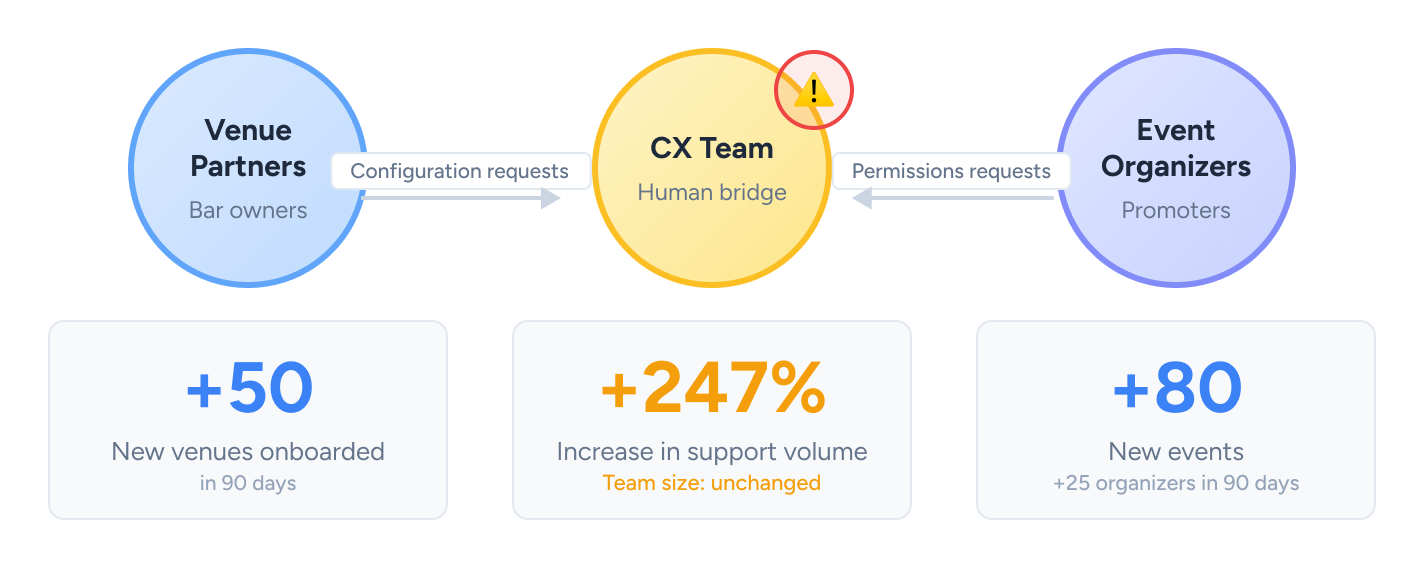
image-increase-cx-tickets

“it keeps fighting me every time I use it.”

— Bar Owner (via SMS)

“can you up the price for tonight’s skip by $5?”

— Bar Owner (via SMS)

“what’s my redemption at? how many more are coming?”

— Bar Owner (via SMS)

“i just need the number, why am I doing math to figure it out”

— Bar Owner (via SMS)

The issue wasn’t any one broken feature. It was systemic. To move forward, the platform needed to shift from a set of disjointed tools to a real-time control center grounded in operational reality.

My Approach: Research & Discovery

To understand what was driving friction, I ran two research phases:

  • Phase 1 - Diagnostic: Understand why the dashboard felt broken even though it was technically functional. 
  • Phase 2 - Co-Design: Collaborate with venue owners and event organizers directly to understand how they operate in the real world.

I led over 20 interviews across bar owners, event organizers, and even hosted a few in-person workshops with our top bar owners.

What emerged were three consistent behavioral themes across roles and venue types:

  1. They operate in two modes: Planning and Heat of the Moment
  2. They think relationally: Hospitality and customer connection are core to success
  3. They need visibility: Real-time signals drive both tactical and strategic decisions

These weren’t just insights. They became the blueprint for how we restructured the product.

Strategic Reframe

Rather than fix friction in isolation, I translated these themes into product swimlanes that would unify the dashboard and reflect real-world operations.

Designing the Dashboard as Control Center

From behavioral themes to product structure

The three behavioral themes became the foundation for three strategic swimlanes:

User Theme:

“I want to engage and build loyalty with my customers”

What they need:

Tools that reflect the human side of nightlife: relationships, memories, hospitality

Product Swimlane: CRM

User Theme:

“I need to manage by business day to day, fast”

What they need:

Tools to plan, coordinate, and adapt operations without relying on internal support

Product Swimlane: Venue & Event Management

User Theme:

“I need to know what’s working and what’s not”

What they need:

Signals and context to drive both heat of the moment decisions and long-term planning.

Product Swimlane: Reporting & Insights

These systems weren’t isolated features. Each was designed to reinforce the others and form a unified, responsive product that worked across operational modes.

Here’s how each system came to life—through UX decisions, tradeoffs, and cross-functional execution.
CRM

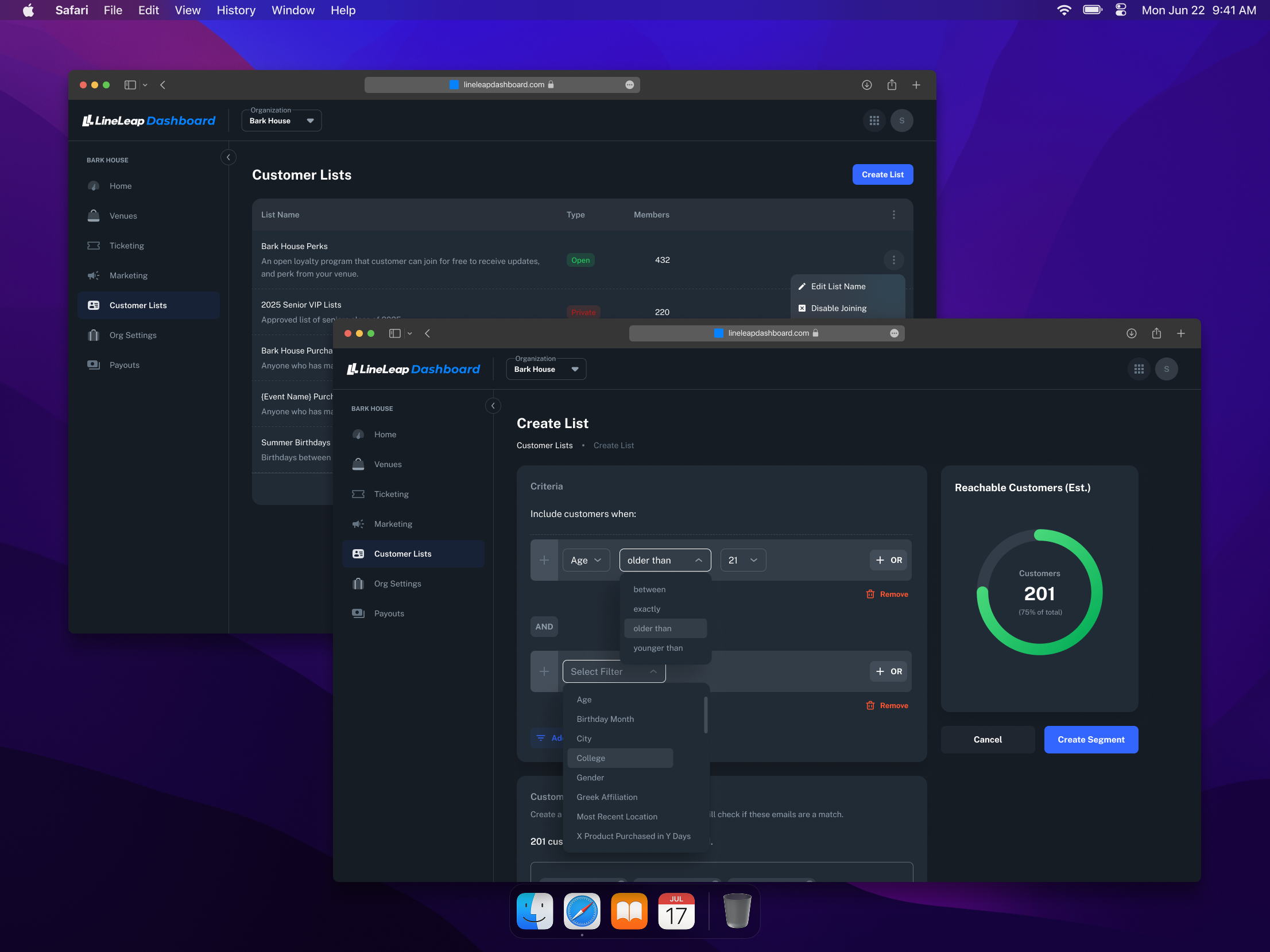
CRM - Digitizing the Hospitality Layer

Turning real-world hospitality tactics into digital tools that help bar owners engage their customers in more meaningful ways.

CRM

Reporting & Insights - Visibility That Drives Action

Redefined reporting to help bar owners and event organizers act fast, plan smarter, and react in the moment.

event-management

Event Management — Planning Meets Real-Time Flexibility

Designed an event system that mirrors how organizers truly work — from ticketing to promoter networks.

Impact Summary

The Dashboard became the live control center for nightlife operators, transforming how 700+ venues and event organizers run their businesses in real time.

Adoption & Expansion

Adopted by top-performing partners. Early pilots with 13 venues sparked word-of-mouth interest from 50+ others eager to join.

Operational Empowerment

Reduced nightly ops support. Partners gained visibility and control over pricing, capacity, and promotions.

Revenue Enablement

Unlocked new revenue streams. CRM and ticketing tools drove weekday traffic and enabled event-driven growth, which created 30+ new partnerships.

Let's connect — I'd love to hear about your team.

in

@

LineLeap Admin Dashboard

Transforming a fragmented platform into a unified control center for nightlife operations

Role

Timeline

Scope

Sole Product Designer

2023–Ongoing

Multi-user B2B Systems Design

Led the end-to-end redesign of LineLeap’s Admin Dashboard, transforming fragmented tools into a cohesive platform for CRM, Event Management, and Reporting through deep user research and co-design, empowering 700+ venue owners and event organizers nationwide.

lineleap-dashboard-cover

The Challenge

The Admin Dashboard was built to be the central platform for venue partners to run their operations. But as LineLeap scaled, the dashboard became fragmented and misaligned with how people actually worked.

Partners were submitting high volumes of support tickets for basic tasks. While the tools technically worked, they weren’t discoverable or intuitive, creating friction across the board.

image-increase-cx-tickets

“it keeps fighting me every time I use it.”

— Bar Owner (via SMS)

“can you up the price for tonight’s skip by $5?”

— Bar Owner (via SMS)

“what’s my redemption at? how many more are coming?”

— Bar Owner (via SMS)

“i just need the number, why am I doing math to figure it out”

— Bar Owner (via SMS)

The issue wasn’t any one broken feature. It was systemic. To move forward, the platform needed to shift from a set of disjointed tools to a real-time control center grounded in operational reality.

My Approach: Research & Discovery

To understand what was driving friction, I ran two research phases:

  • Phase 1 - Diagnostic: Understand why the dashboard felt broken even though it was technically functional. 
  • Phase 2 - Co-Design: Collaborate with venue owners and event organizers directly to understand how they operate in the real world.

I led over 20 interviews across bar owners, event organizers, and even hosted a few in-person workshops with our top bar owners.

What emerged were three consistent behavioral themes across roles and venue types:

  1. They operate in two modes: Planning and Heat of the Moment
  2. They think relationally: Hospitality and customer connection are core to success
  3. They need visibility: Real-time signals drive both tactical and strategic decisions

These weren’t just insights. They became the blueprint for how we restructured the product.

Strategic Reframe

Rather than fix friction in isolation, I translated these themes into product swimlanes that would unify the dashboard and reflect real-world operations.

Designing the Dashboard as Control Center

From behavioral themes to product structure

The three behavioral themes became the foundation for three strategic swimlanes:

User Theme

What they need

Product Swimlane

“I want to engage and build loyalty with my customers”

Tools that reflect the human side of nightlife: relationships, memories, hospitality

CRM

“I need to manage by business day to day, fast”

Tools to plan, coordinate, and adapt operations without relying on internal support

Venue & Event Mgmt

“I need to know what’s working and what’s not”

Signals and context to drive both heat of the moment decisions and long-term planning.

Reporting & Insights

These systems weren’t isolated features. Each was designed to reinforce the others and form a unified, responsive product that worked across operational modes.

Here’s how each system came to life—through UX decisions, tradeoffs, and cross-functional execution.

CRM - Digitizing the Hospitality Layer

Turning real-world hospitality tactics into digital tools that help bar owners engage their customers in more meaningful ways.

CRM

Reporting & Insights - Visibility That Drives Action

Redefined reporting to help bar owners and event organizers act fast, plan smarter, and react in the moment.

lineleap-dashboard-cover

Event Management — Planning Meets Real-Time Flexibility

Designed an event system that mirrors how organizers truly work — from ticketing to promoter networks.

event-management

Impact Summary

The Dashboard became the live control center for nightlife operators, transforming how 700+ venues and event organizers run their businesses in real time.

Adoption & Expansion

Adopted by top-performing partners. Early pilots with 13 venues sparked word-of-mouth interest from 50+ others eager to join.

Operational Empowerment

Reduced nightly ops support. Partners gained visibility and control over pricing, capacity, and promotions.

Revenue Enablement

Unlocked new revenue streams. CRM and ticketing tools drove weekday traffic and enabled event-driven growth, which created 30+ new partnerships.

Let's connect — I'd love to hear about your team.

in

@

LineLeap Admin Dashboard

Transforming a fragmented platform into a unified control center for nightlife operations

Role

Timeline

Scope

Sole Product Designer

2023–Ongoing

Multi-user B2B Systems Design

Led the end-to-end redesign of LineLeap’s Admin Dashboard, transforming fragmented tools into a cohesive platform for CRM, Event Management, and Reporting through deep user research and co-design, empowering 700+ venue owners and event organizers nationwide.

lineleap-dashboard-cover

The Challenge

The Admin Dashboard was built to be the central platform for venue partners to run their operations. But as LineLeap scaled, the dashboard became fragmented and misaligned with how people actually worked.

Partners were submitting high volumes of support tickets for basic tasks. While the tools technically worked, they weren’t discoverable or intuitive, creating friction across the board.

image-increase-cx-tickets

“it keeps fighting me every time I use it.”

— Bar Owner (via SMS)

“can you up the price for tonight’s skip by $5?”

— Bar Owner (via SMS)

“what’s my redemption at? how many more are coming?”

— Bar Owner (via SMS)

“i just need the number, why am I doing math to figure it out”

— Bar Owner (via SMS)

The issue wasn’t any one broken feature. It was systemic. To move forward, the platform needed to shift from a set of disjointed tools to a real-time control center grounded in operational reality.

My Approach: Research & Discovery

To understand what was driving friction, I ran two research phases:

  • Phase 1 - Diagnostic: Understand why the dashboard felt broken even though it was technically functional. 
  • Phase 2 - Co-Design: Collaborate with venue owners and event organizers directly to understand how they operate in the real world.

I led over 20 interviews across bar owners, event organizers, and even hosted a few in-person workshops with our top bar owners.

What emerged were three consistent behavioral themes across roles and venue types:

  1. They operate in two modes: Planning and Heat of the Moment
  2. They think relationally: Hospitality and customer connection are core to success
  3. They need visibility: Real-time signals drive both tactical and strategic decisions

These weren’t just insights. They became the blueprint for how we restructured the product.

Strategic Reframe

Rather than fix friction in isolation, I translated these themes into product swimlanes that would unify the dashboard and reflect real-world operations.

Designing the Dashboard as Control Center

From behavioral themes to product structure

The three behavioral themes became the foundation for three strategic swimlanes:

User Theme

What they need

Product Swimlane

“I want to engage and build loyalty with my customers”

Tools that reflect the human side of nightlife: relationships, memories, hospitality

CRM

“I need to manage by business day to day, fast”

Tools to plan, coordinate, and adapt operations without relying on internal support

Venue & Event Mgmt

“I need to know what’s working and what’s not”

Signals and context to drive both heat of the moment decisions and long-term planning.

Reporting & Insights

These systems weren’t isolated features. Each was designed to reinforce the others and form a unified, responsive product that worked across operational modes.

Here’s how each system came to life—through UX decisions, tradeoffs, and cross-functional execution.

CRM - Digitizing the Hospitality Layer

Turning real-world hospitality tactics into digital tools that help bar owners engage their customers in more meaningful ways.

CRM

Reporting & Insights - Visibility That Drives Action

Redefined reporting to help bar owners and event organizers act fast, plan smarter, and react in the moment.

CRM

Event Management — Planning Meets Real-Time Flexibility

Designed an event system that mirrors how organizers truly work — from ticketing to promoter networks.

event-management

Impact Summary

The Dashboard became the live control center for nightlife operators, transforming how 700+ venues and event organizers run their businesses in real time.

Adoption & Expansion

Adopted by top-performing partners. Early pilots with 13 venues sparked word-of-mouth interest from 50+ others eager to join.

Operational Empowerment

Reduced nightly ops support. Partners gained visibility and control over pricing, capacity, and promotions.

Revenue Enablement

Unlocked new revenue streams. CRM and ticketing tools drove weekday traffic and enabled event-driven growth, which created 30+ new partnerships.

Let's connect — I'd love to hear about your team.

in

@